
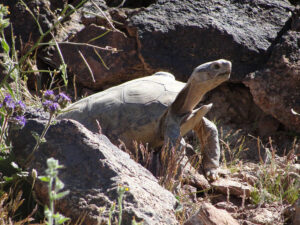
 The desert tortoise is one of the most special creatures out here. As a local, I still feel incredibly lucky every time I spot one slowly making its way across the desert—it’s never something you get used to.
If you ever see one, consider yourself fortunate. These gentle, wise creatures spend about 95% of their lives in underground burrows [1], only coming out mostly after seasonal rains.
And here’s something I love—they can live up to 80 years or more [2], quietly existing in this landscape long before many of us arrived.
They’re also surprisingly plant-based locals. About 95% of their diet is made up of grasses, wildflowers, and cacti [3]. Every now and then, they might nibble on bones or shells—but that’s just for minerals like calcium, not because they’re hunting anything.
What’s even more fascinating is how they survive out here. Desert tortoises don’t just eat for energy—they eat for water too. Their bodies are designed to store water, so after a good rainy season, they can stay hydrated for months.
It’s just another reminder that life in the desert isn’t harsh—it’s incredibly intelligent.
Why Desert Tortoises Need Our Help
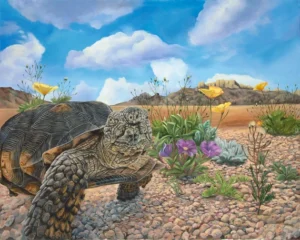 As of mid-2025, the Desert tortoise has received increased protection in California and is now listed as endangered under the California Endangered Species Act (CESA) [4]. At the federal level, it is still classified as “threatened” under the U.S. Endangered Species Act [5]. What this means is simple: these tortoises are legally protected, and it is illegal to harm, handle, or collect them.
They face challenges from:
• Road traffic
• Habitat loss from development (including large-scale projects)
• Climate change and drought
• Predators like ravens
Even in protected areas, their numbers have dropped significantly over time. And yet, they play a powerful role in keeping the desert alive. Their burrows provide shelter for other animals and create cooler, more stable soil conditions. As they feed on plants, they also help spread seeds—supporting balanced plant growth across the Mojave. They aid in desert conservation.
In many ways, they quietly help the desert take care of itself.
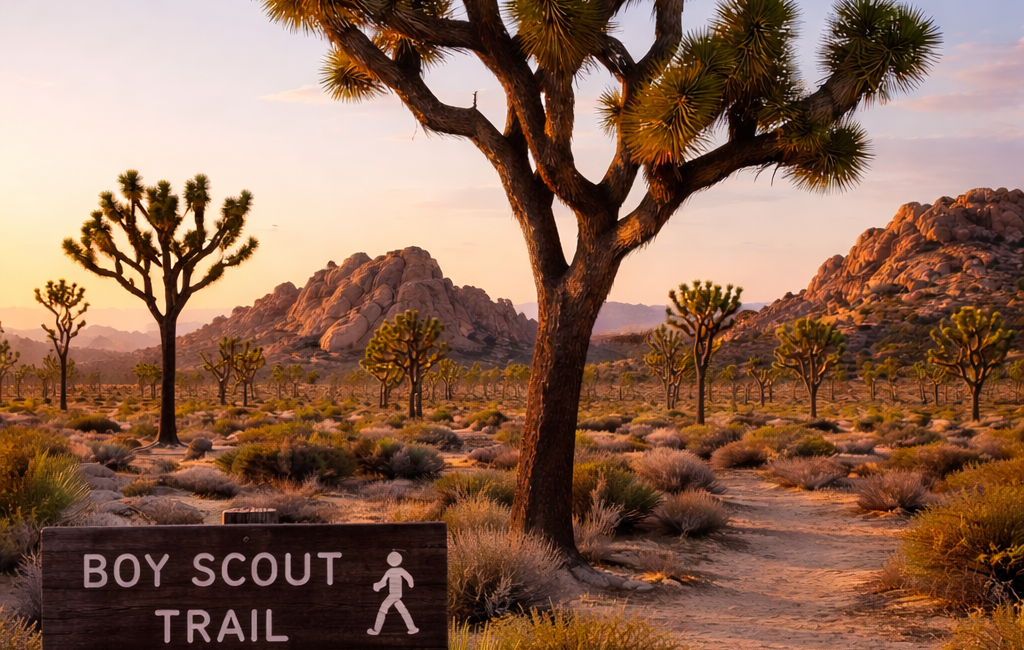
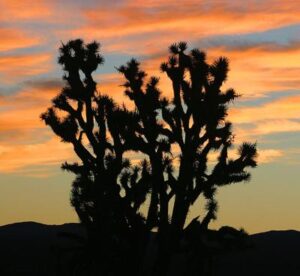 Then there’s the Joshua tree—those striking, sculptural forms that have become such a defining part of the desert here in Joshua Tree National Park.
With their twisting branches and dramatic silhouettes, they’re one of the most recognizable sights in the Mojave.
The name “Joshua tree” actually comes from early Mormon settlers in the mid-1800s. As they crossed the desert, they saw the trees’ upward-reaching branches and believed they resembled Joshua lifting his hands in prayer—guiding them forward through the desert.
But long before that, Native American tribes like the Cahuilla already knew of these trees. They used them for practical purposes—like weaving baskets and sandals—and had their own names for these “iconic trees”.
Joshua trees aren’t technically trees—they’re a type of yucca [6]. They even rely on a special moth for pollination, making them part of a very unique desert partnership.
Protecting Joshua Trees
As of 2023, the Western Joshua tree is not listed as threatened or endangered at the federal level under the U.S. Endangered Species Act [7]. However, here in California, it is protected under the Western Joshua Tree Conservation Act, which was created to safeguard these iconic desert plants [8].
In simple terms, this means you can’t remove, damage, or destroy a Joshua tree without proper authorization, and development projects must follow strict conservation guidelines, including mitigation measures.
Like the tortoise, Joshua trees are also under threat—especially from climate change.
- Rising temperatures
• Less predictable rainfall
• Fewer surviving seedlings
• Increasing wildfires
All of this makes it harder for new trees to grow and replace older ones. Scientists believe large portions of their habitat could shrink by the end of the century [7] if conditions continue.
Wildfires are another growing danger. Joshua trees aren’t built to survive fire, and even a single blaze can wipe out entire areas.
How Visitors Can Help Protect the Desert
The desert is both resilient—and incredibly fragile.
Therefore, when visiting:
• Stay on designated trails
• Avoid climbing or damaging trees
• Be mindful of fire risks
• Leave no trace
Even small actions make a big difference.
Final Thoughts
The Mojave Desert isn’t empty—it’s alive, connected, and quietly extraordinary. From the slow-moving tortoise to the striking Joshua tree, everything here plays a role in a delicate balance that has existed for thousands of years. Protecting this desert doesn’t require big changes—just a little awareness.
When we respect it, we help ensure that these iconic silhouettes and hidden desert locals continue to thrive for generations to come.
Experience the Mojave Desert for Yourself
There’s no better way to appreciate the Mojave Desert than spending a few days immersed in its peaceful landscapes. At Harmony Motel in Twentynine Palms, you’ll be just minutes from Joshua Tree National Park, where you can experience breathtaking sunrises, iconic Joshua trees, incredible wildlife, and some of the darkest night skies in California.
Book your stay today at www.harmonymotel.com
Summer Nights Are for Stargazing in Joshua Tree
Sources
[1] National Park Service – Desert Tortoise
https://www.nps.gov/moja/learn/nature/desert-tortoise.htm
[2, 4, 5 ] U.S. Fish & Wildlife Service – Desert Tortoise
https://www.fws.gov/species/desert-tortoise-gopherus-agassizii
[3] Arizona-Sonora Desert Museum – Desert Tortoise Fact Sheet
https://www.desertmuseum.org/kids/oz/long-fact-sheets/Desert%20Tortoise.php
[6] National Park Service – Joshua Tree
https://www.nps.gov/jotr/learn/nature/joshua-tree.htm
[7] U.S. Fish & Wildlife Service – Joshua Tree Species Status
https://www.fws.gov/press-release/2023-02/service-finds-endangered-species-act-protection-not-warranted-western
[8] California Department of Fish and Wildlife – Western Joshua Tree Conservation Act
https://wildlife.ca.gov/Conservation/Plants/WJTC
National Geographic – Joshua Trees & Climate Change
https://www.nationalgeographic.com/environment/article/joshua-trees-climate-change
Photos from
- Desert Tortoise (Gopher us-Agassizii) Mojave National Preserve (U.S Park Service)
- Desert Tortoise Telemetry and Conservation (U.S National Park Service)
- An Icon of the Mojave Desert/Lefestyle/havasunews.com